Browsers that can run WordySpot
Add WordySpot to Lemur Browser on Android
Lemur installs WordySpot from the Chrome Web Store, like a desktop Chrome does. The store may open in its phone layout first; a reload fixes that.
Open this page on your Android in Lemur, or follow the steps from wordyspot.com there.
-
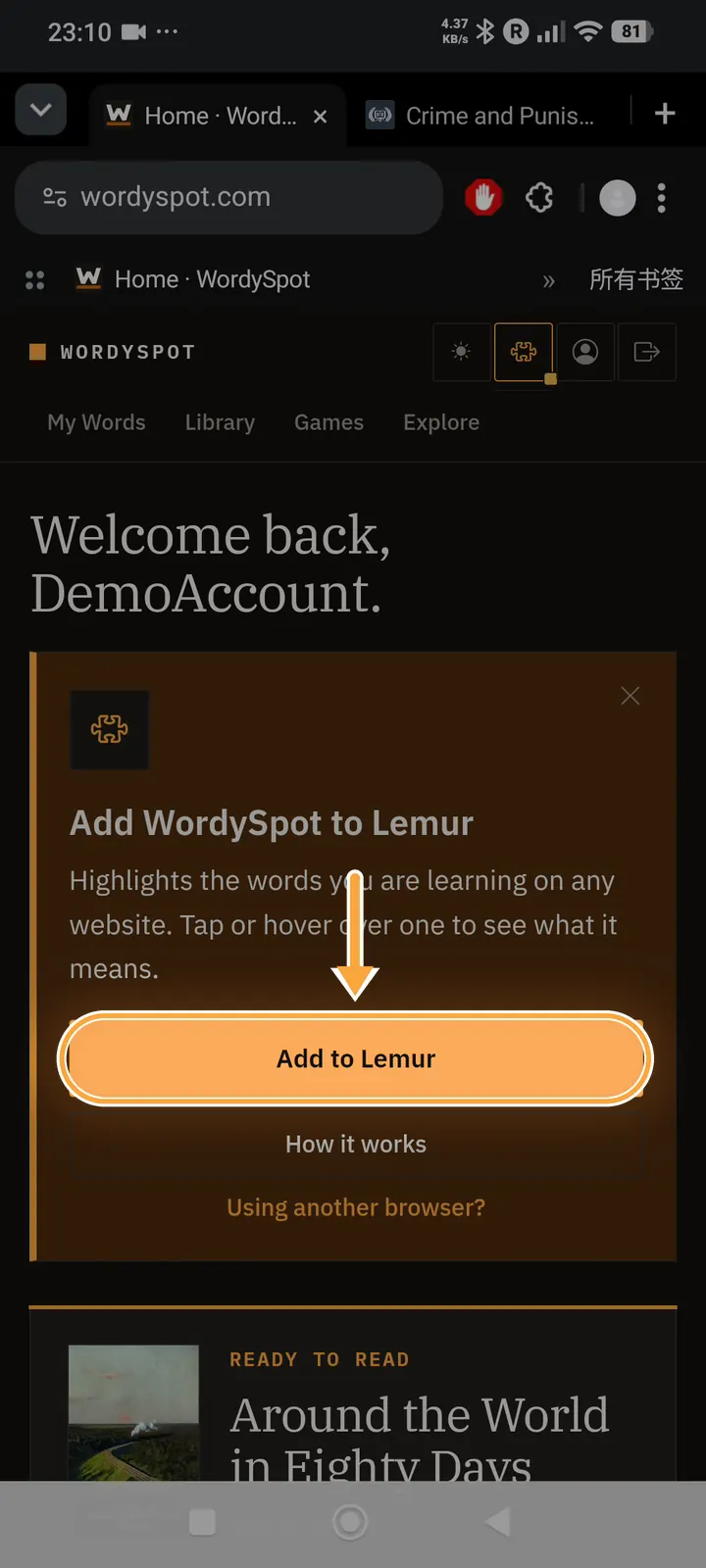
Step 1
Open wordyspot.com in Lemur and tap Add to Lemur
Sign in to WordySpot in Lemur. The home page offers the extension for this browser; tap Add to Lemur.
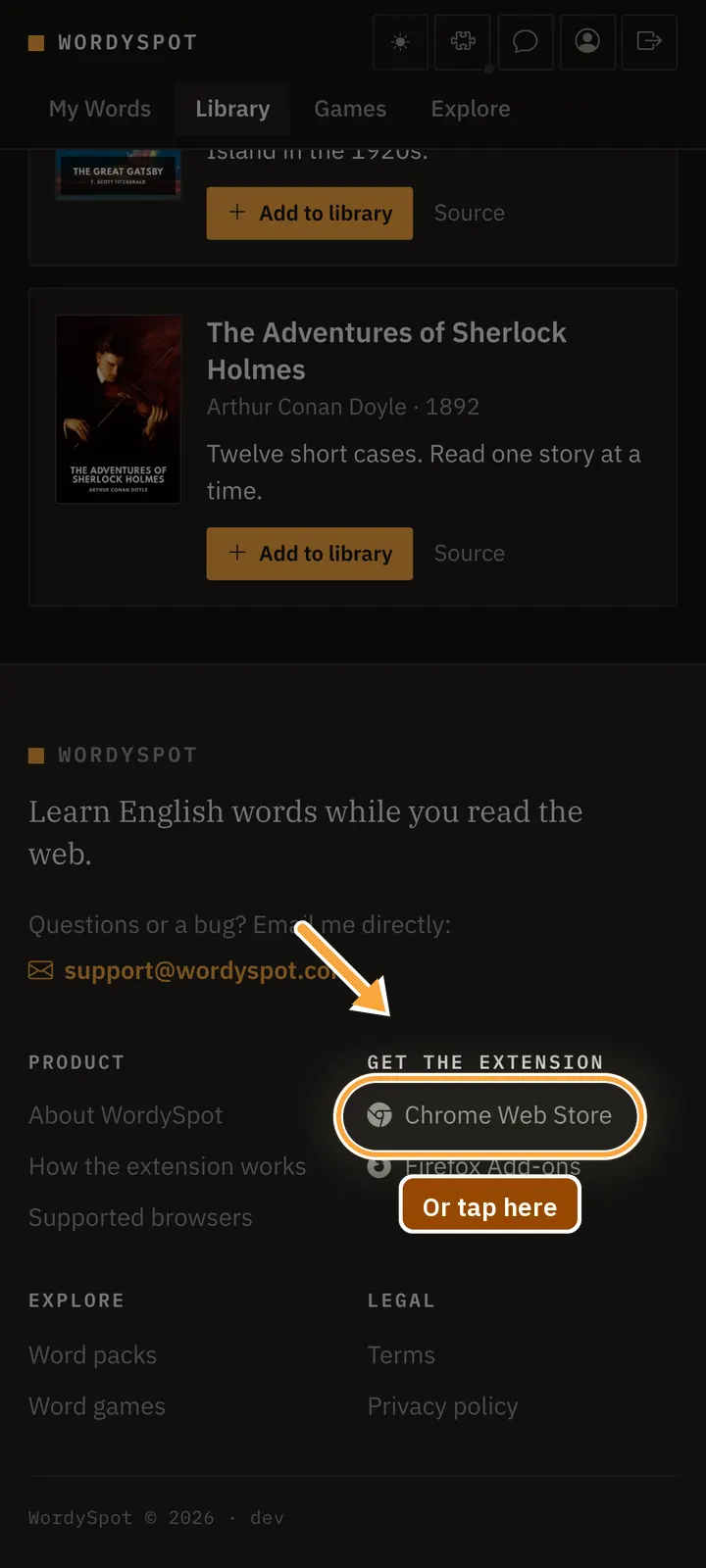
Or scroll to the bottom of any page
Every wordyspot.com page ends with the store links. Under Get the extension, tap Chrome Web Store.
-
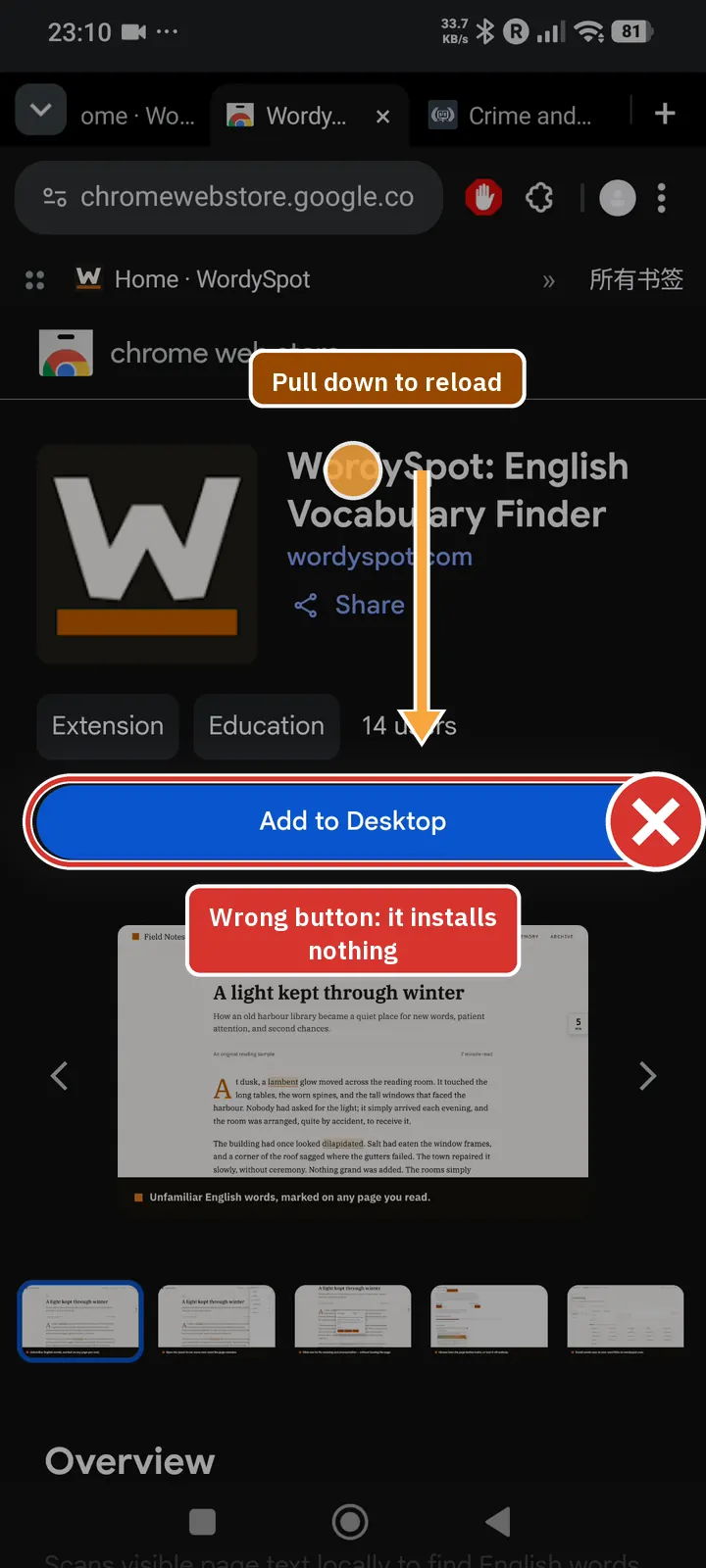
Step 2
Got Add to Desktop? Pull the page down to reload
The Chrome Web Store often opens in its phone layout, with an Add to Desktop button. That is the wrong button: it does not install anything. Pull the page down to reload it, and repeat until the button says Add to Chrome.
-
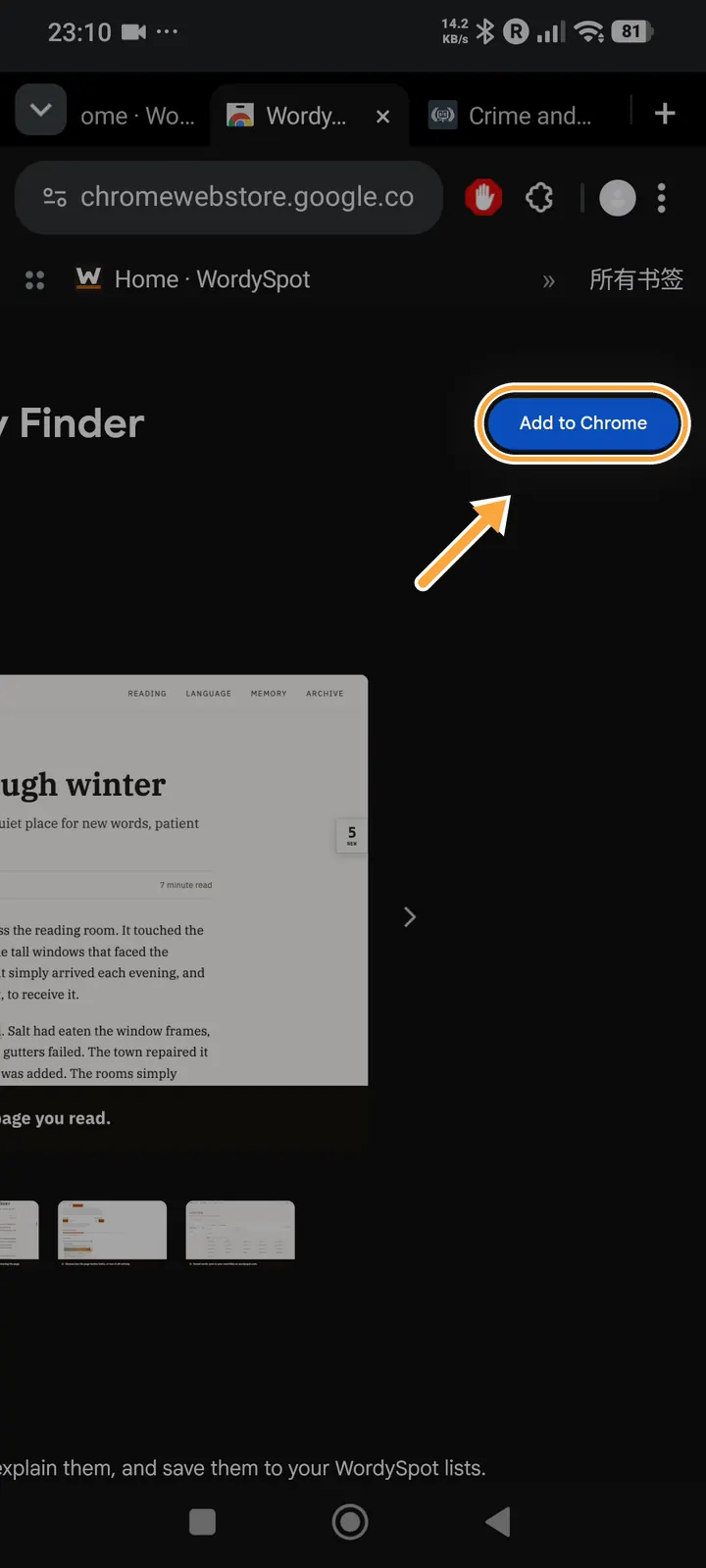
Step 3
Tap Add to Chrome at the top right
After the reload the store shows its full listing, which is small on a phone screen; zoom in if you need to. Lemur runs Chrome extensions, so Add to Chrome is the right button here.
-
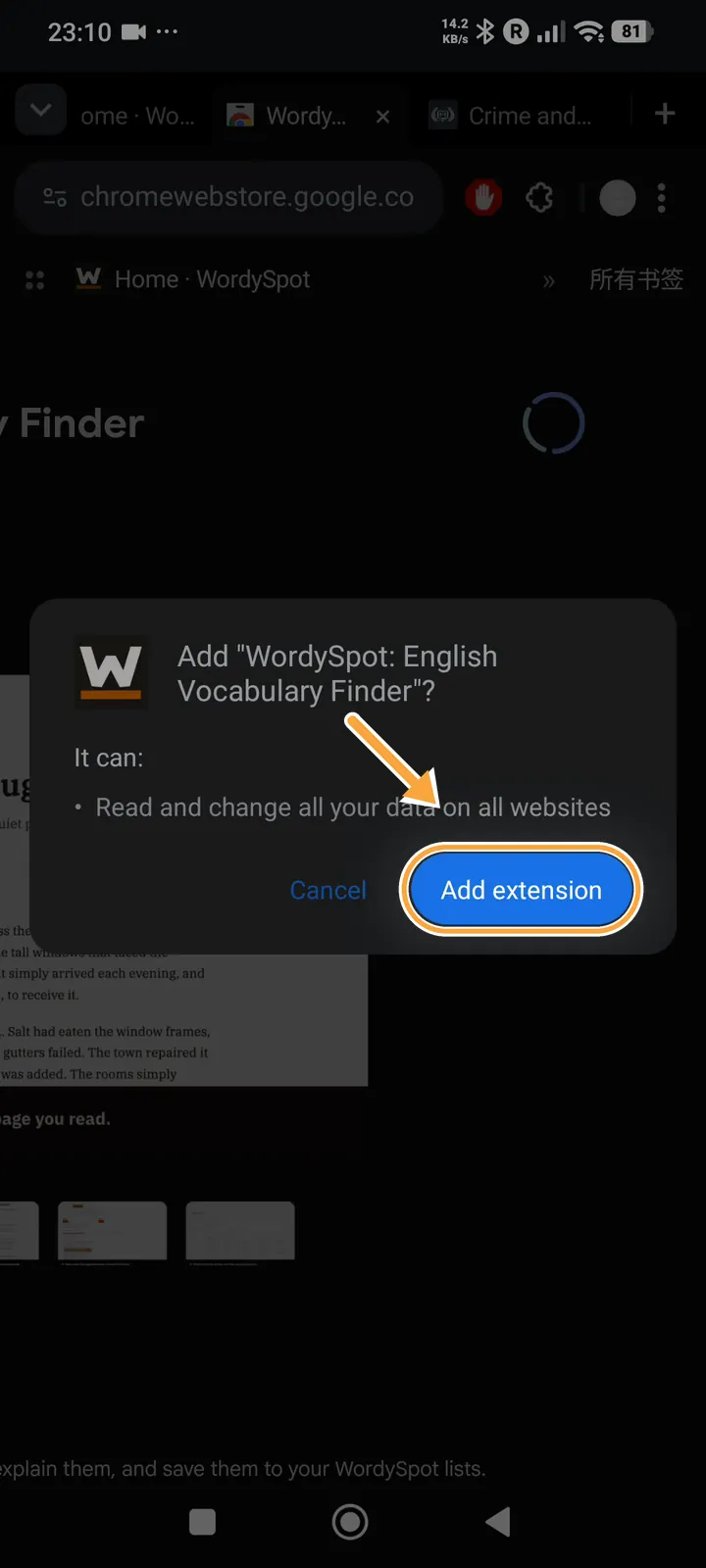
Step 4
Tap Add extension
Lemur asks before an extension can read the pages you open. WordySpot needs that to find the words you are learning. Tap Add extension.
-
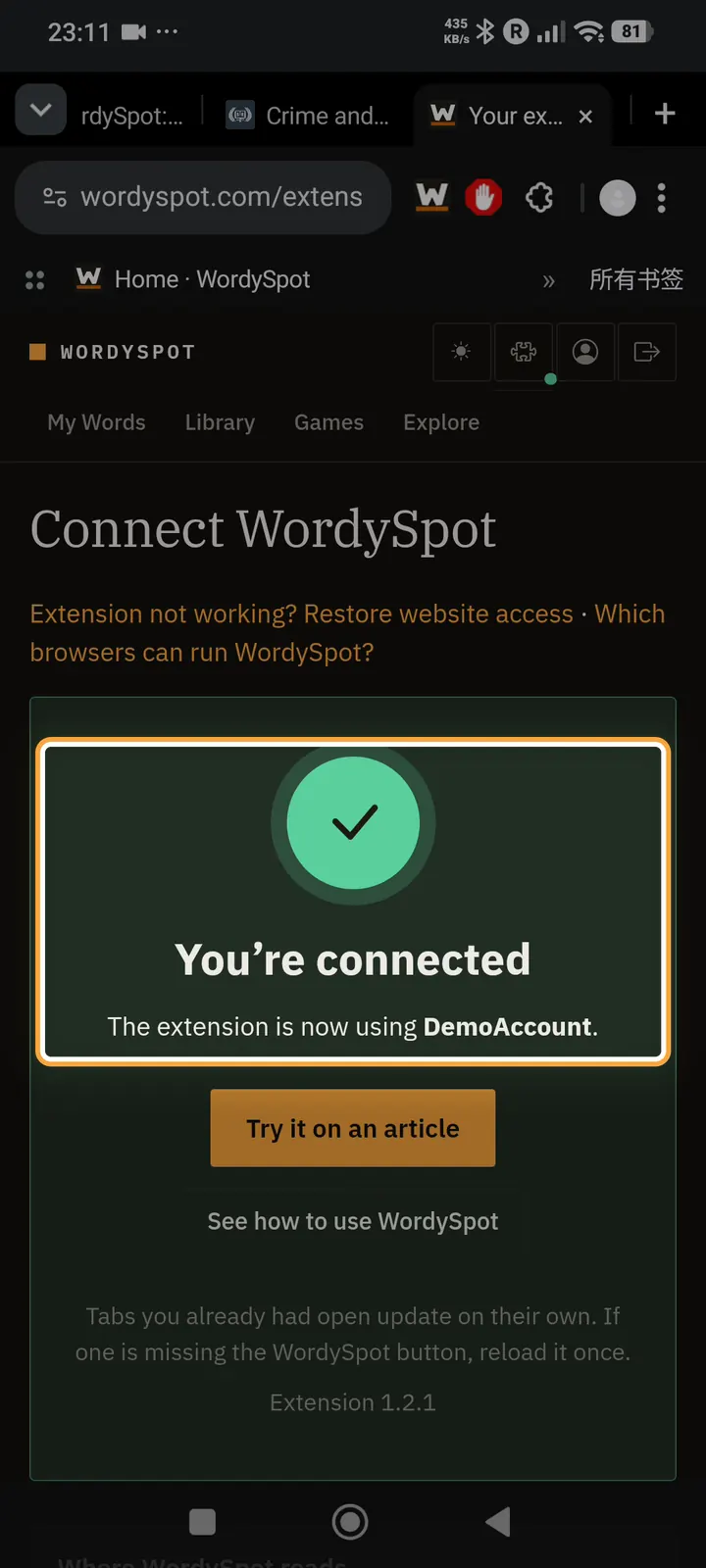
Step 5
Wait for “You’re connected”
WordySpot opens a new tab and connects to your account by itself. There is nothing to type. If it asks you to sign in, sign in with the account you use on this site.
-
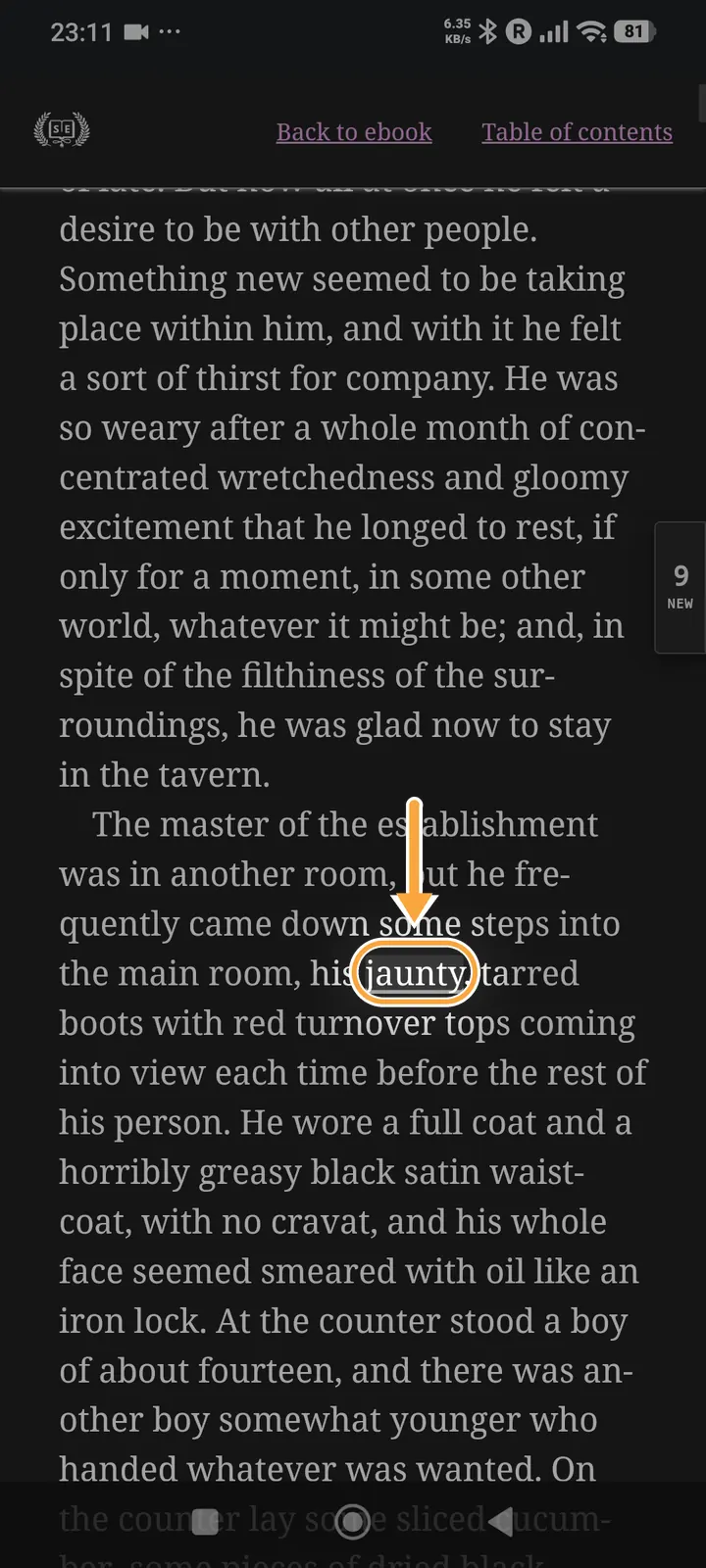
Step 6
Open a page and tap an underlined word
Open any page in English. Words you have not learned yet are underlined; tap one to see what it means and save it to a list.
-
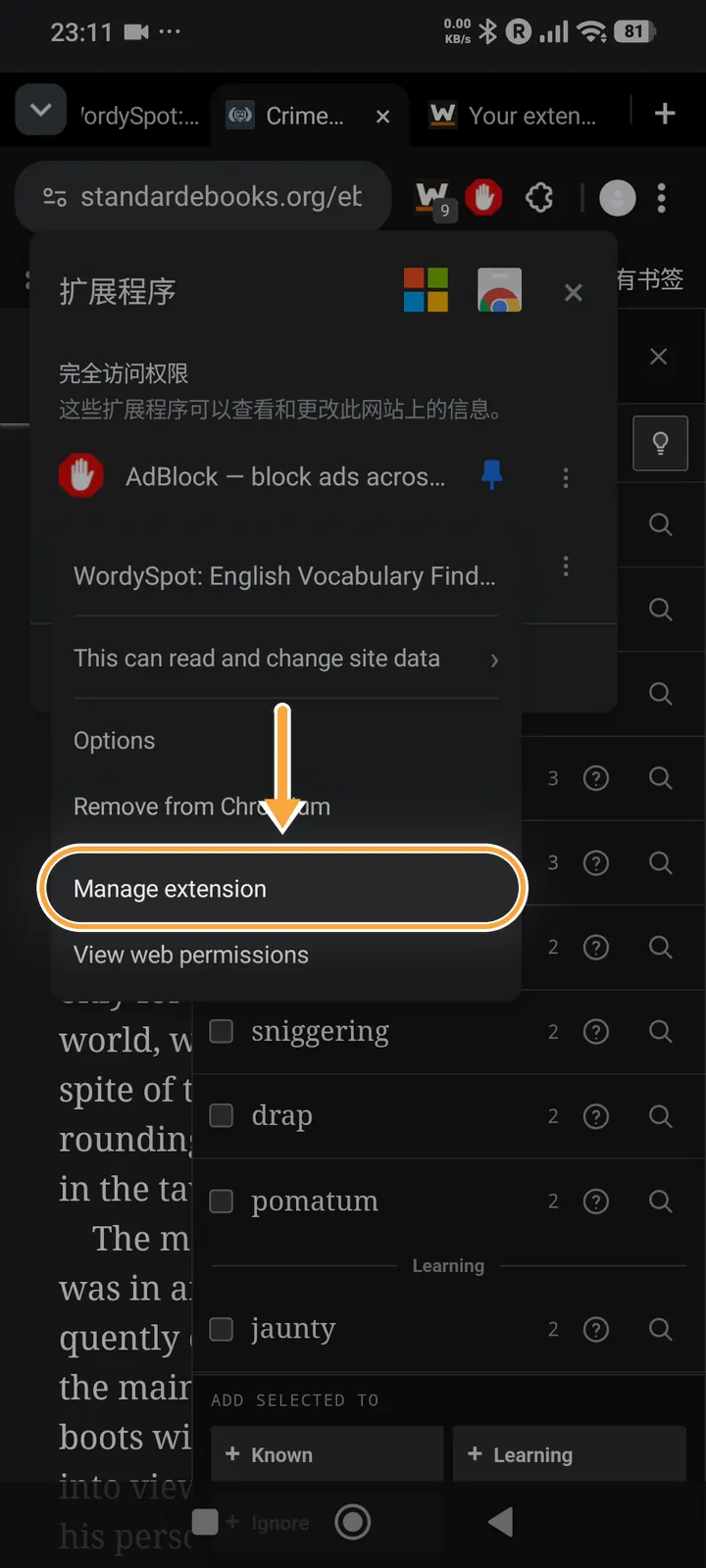
Step 7
Later: manage it from the puzzle icon
Tap the puzzle icon in the toolbar, then the three dots next to WordySpot, then Manage extension. That page turns WordySpot off, sets which sites it can read, or removes it.
Still stuck?
Phones and browsers update often, so a screen may look a little different from the one here. Write to support@wordyspot.com with your browser and the step that went wrong, and I will look.